Popularity: 1% [?]
Archive for the ‘Photography’ Category
Shooting Babies – Part II
About a month ago I wrote a post about shooting baby closeups. Just a quick reminder – my friend asked me to shoot his baby boy, and I used natural window light to shoot mainly closeups because I had problems with background.
This time it so happened that I visited my friend again, and I happened to have my camera with me. His baby boy was in a playful mood and since he liked my previous photos he (not baby, my friend of course!) asked me to take a few more. This time I decided to solve all my background problems and shoot something more than closeups. In addition, it was late in the afternoon, and the sun light was almost gone, so In all photographs that you’ll see here, I used flash, and only in the first one, in addition to flash from the right, there is window light from the left.
In order to get good shots I had to solve several problems – to figure out lighting would be the most important one, and background would be the second important. Since me and my friend’s family are good friends I had no problems communicating with them and their baby boy Eric was in a perfect mood for taking photographs – he was smiling and playful.
In the photo below the main lighting was sunlight from the window on the left, but if I didn’t use flash from the right side, then the shadows on the faces would be too deep. So I used a flash and set it to 1/8th of it’s full power to fill in the shadows.
Click on the photo to enlarge.
For lighting I only had one flash (Canon 430EX) but I also had remote trigger making it possible to have lighting off-camera. In the photo below Eric was sitting on the couch, and I placed a flash with 1/4 CTO gel on it facing away from him straight into the pillows of the couch so that Eric would be lit not with direct but with reflected light (this made the light source bigger and shadows smoother). In addition I asked his father to hold a white bed sheet close to Eric’s right (camera left) side. This made the shadows on his face lighter, because light from the flash reflected from the pillows hit the white sheet, and reflected from it to the shadowed part of Eric’s face.
The background in this photo is almost black because I used flash and the ambient lighting didn’t affect the shot at all.
Click on the photo to enlarge.
For the next photo I wanted to do something different, something bright and happy. They had these pieces of soft foam that they used to place on the floor for Eric, and they made an interesting background. In addition I asked Eric’s mother to blow some bubbles for him to play with, and started shooting. I caught a few nice frames and this one I liked the most. In this shot there is still only one flash placed on the right side and reflected form the pillows.
Click on the photo to enlarge.
Now we went from the living room to Eric’s room, and here I encountered another problem. The walls of Eric’s room were green, and this is bad for your white balance. I know, I know – you say “shoot in raw, and then correct in post”, but I wanted to fix this in-camera making post processing time shorter. So here is what I did – I placed my flash facing the opposite wall so that the light would reflect off of it (because this is how I wanted my lighting to be) and then I took a shot of a green wall (the opposite wall from the flash). Then I changed to manual white balance and chose that shot of a wall as a reference. This made wonders for my white balance, and photos started to look so much better!
Click on the photo to enlarge.
In this photo Eric’s father is holding the flash facing the wall and reflecting from the wall to Eric’s and his mother’s faces. Yes, it is still only one light
Click on the photo to enlarge.
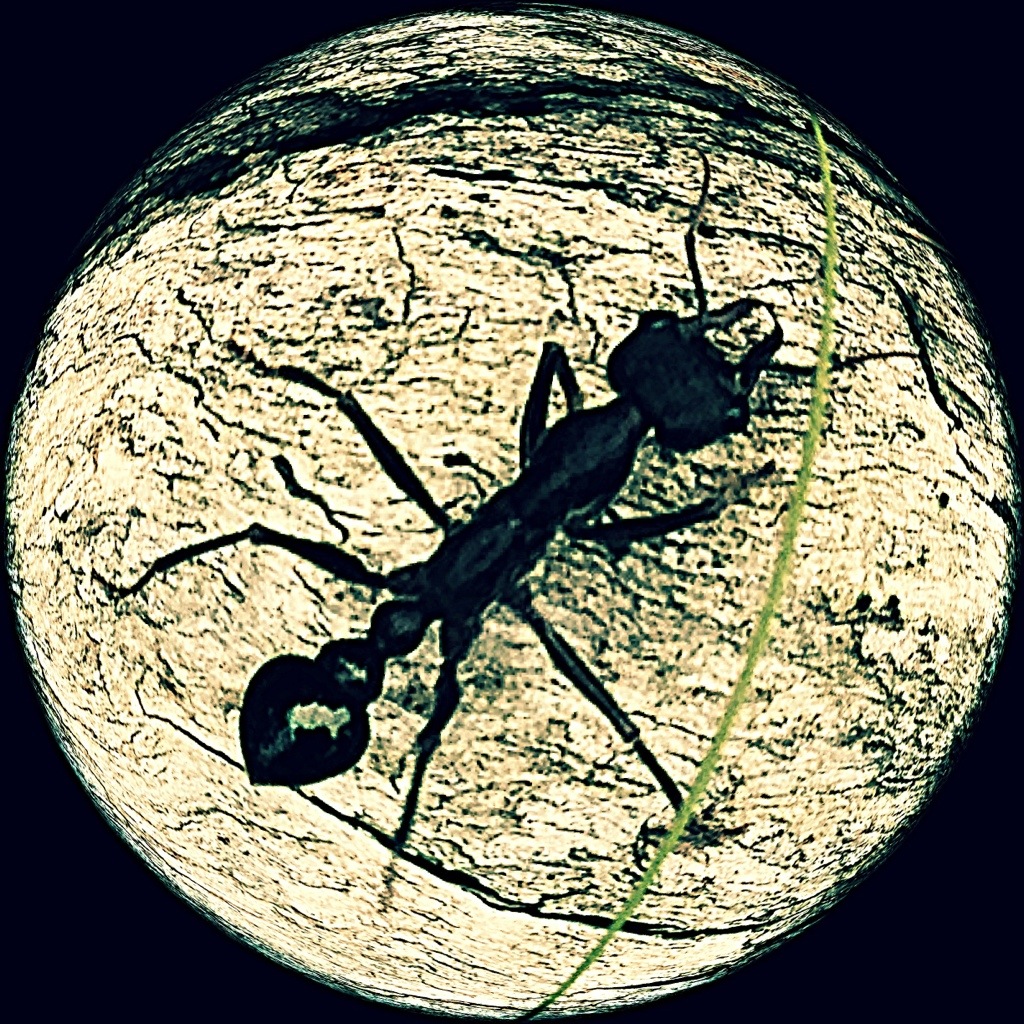
And finally I wanted to play around and take some unusual shots. So I changed to a wide angle lens (with UV protector on it, in a sec you’ll understand why) and started shooting Eric from various angles from a very close distance. Eric got very interested in me and my camera and started touching the lens (you see, the UV protector was a good idea
), and I made some very nice shots even though they were distorted due to the wide angle.
Click on the photo to enlarge.
In this post I talked about lighting and background, which are all technical details, but it is not enough to make a good shot of a baby and his parents. My advantage here was that I knew them so they were comfortable around me, and I was comfortable around them – this is very important. The more relaxed your subjects are, the better your pictures will be. It is also important to know what do you want to show in your photos (the love of parents for their child, happiness, thoughtfulness) and then try to find situations and angles to show it. And of course – experiment, experiment, and experiment!
Till the next time,
Take care!
Greg.
Popularity: 2% [?]
Using UV Filters For Protection – Right or Wrong?
For those of you who don’t know what the hell I am talking about, I’ll briefly explain the issue.
When you buy an expensive lens, you want to protect it’s front glass element from scratches or other accidents. So most likely the photo dealer will suggest you to buy a UV (ultraviolet) protection filter to screw on your lens. But the question is – will shooting with UV filter degrade the image quality?
Lately I found myself bothered with this question a lot. It started when I bought my Canon 24-70mm f2.8 L lens. I bought it second hand, and the guy who I bought if from told me that it was with the UV filter all the time since the day he bought it, so it is completely scratches free. Way back I took an advanced course in optics in university, and I know that adding additional optical element to optical system changes system’s overall performance. This is exactly what you are doing to your optical system, i.e. your lens, by adding additional optical element, i.e. UV filter.
So how significant this “change in performance” is? In other words will the final image suffer in quality because of that?
I felt incompetent to perform tests to find an answer myself so I did an extensive web research, and I found a lot of information on this subject. It seems that there is no single conclusion to this matter, but here is my summary on it, which in my opinion includes all the major points, fact,s and conclusions regarding using UV filter on your lens for protection.
- Putting UV filter on your lens will certainly degrade lens’s performance.
- Explanation to this is pretty simple. When you screw on the UV filter on your lens, you basically add one more optic component, but not only that you also add a space filled with air between the filter and lens’s front optic element. So when ray of light hits your lens, instead of hitting the lens’s front element and passing to other optical elements inside the lens, it first hits the UV filter, refracts, passes to the space filled with air between the UV filter and the lens, and only then enters the lens. That ray of light can also be reflected several times between the lens and the UV filter (coating on the UV filters tries to prevent that).
- The extent of the image quality degradation may vary from invisible to the human eye to a severe degradation in contrast and sharpness (and other image qualities), and it depends on the following factors:
- The quality of the UV filter
- I found many photographers complaining about Tiffen UV filters (even about the expensive ones). I even saw a test one guy did showing that using a Tiffen UV filter significantly decreases sharpness and contrast. That guy didn’t write the exact model of that filter though.
- There is general agreement among photographers that expensive UV filters with double coating are the best choice if you must put a UV filter on your lens. Many photographers recommend the high end UV filters from B&W, Nikon, Hoya (Super HMC), Singh-Ray.
- The subject that you are shooting – or more important the direction of light. For example if you are shooting into the light, then with UV filter there are more chances to have lens flare (partial solution is to use lens hood).
- The lens. If the lens that you use is not of high quality, it may already produce less than great images, and adding a UV filter won’t make them worse than they already are.
- The quality of the UV filter
- There is everlasting debate whether one really needs the UV filter to protect the lens. Here are some pros and cons:
- Pros:
- UV filter gets dirty instead of the lens, so you don’t have to clean the lens that often (just clean the UV filter), thus protecting the lens’s coating.
- When shooting on the beach, or during sand storms, or in any conditions where there are tiny particles in the air, which eventually land on your lens, you are risking scratching your lens when cleaning. Better scratch the UV filter.
- Lens cleaning tip – when there are tiny particles on your lens don’t wipe them off because that can scratch the lens. Wash the front element first and then wipe it with micro fiber cloth.
- If you accidentally drop your lens, or bump it into something, the UV filter will take the blow saving the lens.
- Actually another opinion is that in such situations if UV filter breaks then its glass might easily scratch the lens.
- The degradation of image quality resulted from UV filter is negligible in most cases.
- Pros:
-
- Cons:
- This one is somewhat philosophic – why put a 100 dollars piece of glass on a $1500 expensive lens? It means that it is very difficult to produce a high quality lens, and this is why it is so expensive, and by putting a relatively cheap (to the lens’s price) UV filter, you must degrade it’s quality.
- Lens hood does great job protecting the lens so no UV filter is needed in most situations.
- Don’t over protect your equipment risking loosing in image quality. Be reasonable, and predict when your lens might be in danger and when not.
- The hard coating on most expensive lenses is very strong and can withstand numerous washes and cleanings (as long as you do it wisely).
- Buy Lens Warranty instead of UV filter
- Cons:
Here is a great test of UV filters in action by Ken & Christine
In conclusion, there is no simple right or wrong here. Having all the information above you must decide for yourself whether to use UV filters or not. I decided to use them when shooting on the streets or in dusty conditions, but to remove them when shooting portraits, studio, or landscapes, in other words when there is little risk to damage the lens. I also use lens hoods almost all the time. If I was a millionaire and money wasn’t an issue
, I probably wouldn’t use the UV filters at all just to be sure that I am getting the maximum quality that my lens can deliver.
If you have additional information regarding this issue, you are welcome to share it here, and
Remember, you only have to enter your name to leave a comment!
Have a great day,
Greg.
Popularity: 2% [?]
Finding Sources Of Inspiration And Ideas for Photographs
It is a very common issue among photographers, therefore many articles were written on this, and now it is my turn. In this post I will describe how I try to keep myself inspired and what helps me to come up with ideas for photographs hoping that you find my experience useful.
Inspiration and ideas go somewhat together – when you feel inspired, most of the chances that you’ll have ideas for photographs, and when you have an idea for photograph, it’ll probably inspire you to bring it to life. Therefore the following text will be a mix of tips for getting inspired and coming up with ideas for images.
- I have a notepad in which I write quotes from different sources, which inspire me. You know, you read something or watch TV and at some point you hear a sentence that makes you go ” That’s right! What a great thought!”. If you don’t write it down most of the chances that you’ll forget it. So I write down these quotes and go over them from time to time or when I feel uninspired. That helps a lot, because not only you will be reading inspirational quotes, but you will also remember the circumstances at which you wrote it down, and that in itself can bring back the inspiration.
- During your “good” periods, when you feel inspired think of the things, events, places, people, which inspire you and write all that in the same notepad. It’ll help you a lot to get some of the inspiration back during the “low” periods.
- Another thing that inspires me is listening to the music that I like. Listening to music while looking around for ideas for photographs can be a huge help. Think about it for a second – in the movies they always use various kinds of music to create different moods. Take action movies for example. A certain music can add tension to otherwise usual situation. So when you listen to certain music and look around you, you will see things differently depending on the music that you listen to and it just might inspire you to raise your camera.
- I have a separate folder on my computer with my best photographs. When I create an image that I like very much, I add it to that folder. When inspiration leaves me and I feel that I won’t ever be able to create one good image, I go over my best images to remind myself what I am capable of.
- When I come across an image that captivates me, I try to find out who is the photographer and then visit his website. If I find his works exceptional I bookmark his website. Over the years I gathered list of photographers that inspire me, and I come back and go over their work when I need inspiration.
- I bet it happened to many of you, you keen photographers! You walk around doing your daily routine, and then suddenly a picture or a scene pops into your mind. It might be due to something that you see in front of you (on the street, in public transport, etc.), or because of your thoughts at that moment. It doesn’t matter why. But when it happens – write it down in a few words so that you won’t forget it. I do it in my iPhone because it is always with me. I have this nice diary application called Momento, and I write down there in a few words these pictures of my imagination. It doesn’t mean that I implement them all, but when I am out of ideas, I take a look at my notes and it helps.
- In the Momento app that I mentioned above I can also add photos to text. So if I see certain situation and an idea pops to my mind based on that situation, I simply take a photo of it and add it to the diary entry.
Well that’s about it. All these things combined help me stay inspired and keep shooting during my lowest periods and I hope that you’ll find useful at least some of them.
If you have your own ways to get ideas for photographs and stay inspired, I sure would like to hear about them in the comment section below, and
Remember, you only need to enter your name to leave a comment!
Greg.
Popularity: 3% [?]